Japan With Young Kids: What My Trips Taught Me About Travelling There with Toddlers and Babies
Japan was my first real travel obsession. I visited solo for the best part of a decade, five trips, countless bowls of ramen, and one very embarrassing attempt at a Japanese onsen, before I ever thought about what it would look like to go back with kids in tow.
Turns out? It’s even better.
I’ve now taken my girls to Japan twice in two years: once when my eldest was 18 months old, and again when she was three and her little sister was just four months old. And both times, Japan with kids exceeded every expectation I had. It’s the destination I recommend without hesitation to parents who are nervous about international travel with young children, and the one I’ll keep returning to for as long as my kids will let me drag them onto a 10-hour flight.
This guide brings together everything I’ve learned across five solo trips and two family adventures: what actually works when you’re travelling with a toddler and a baby, what I’d do differently, and why Japan deserves a spot at the very top of your family travel list.
Why Japan works (even with little kids)
Japan is honestly one of the best places in the world to visit with kids. Everything is impeccably clean. The streets feel safe, even at night. People are respectful, public transport is incredibly reliable, and despite having a reputation for being reserved, Japanese people absolutely love children.
I was nervous about taking my toddler in particular, because toddlers are inherently loud, boisterous and make their presence known. But she was met with smiles and whispers of “oooh kawaii (cute)” wherever we went. And there is so much to do in Japan, particularly in the cities, that kids are genuinely spoilt for choice.
We visited twice in the space of two years: the first time with our then 18-month-old, and the second with our three-year-old and a four-month-old baby in tow. With some thoughtful planning and a willingness to slow the pace right down, both trips were easier than I ever expected.
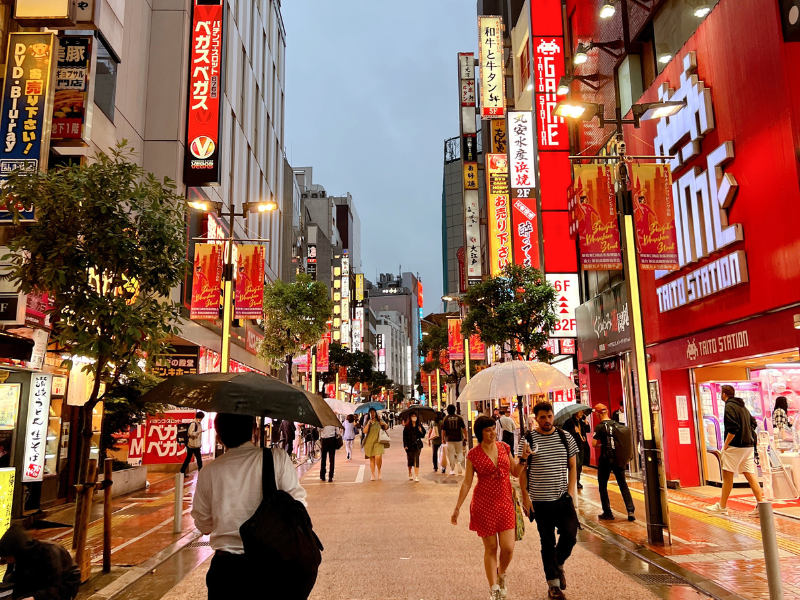
Getting to Japan and around Japan with kids
Flying to Japan with kids
From Sydney, it is around 10 hours to Tokyo, which means navigating a long haul flight with a baby is the first hurdle to tackle. I’ve written a full guide on flying with young kids if you need it.
Getting around Japan and the JR Pass
Once you’re there, you’ll need to decide how you plan to get around and whether the JR Pass is a worth it for your trip. The pass can be useful if you plan on taking a few Shinkansen trips (bullet train) and the ferry to Miyajima Island is included too.
One thing to note: kids under 6 travel free on the JR network, but they must sit on your lap if the train is full. The JR Pass doesn’t cover all trains however, though, so you’ll need a Suica card or individual tickets for most Subway lines.
Strollers versus carriers
Honestly, both. Japan’s cities are enormous, and even an energetic three year old will hit the wall by mid-afternoon. We used our travel stroller (we love our BabyJogger City Tour 2) and it was brilliant for long days out. Having a stroller and a carrier, meant that the 3 year old could rest when she was tired and the baby could move to the carrier.
I recommend purchasing a quality foldable travel stroller so that you can collapse it on busy trains and to get up and down stairs at stations easily.
That said, some attractions don’t permit strollers inside. teamLab Planets, for example requires you to leave the pram at the door, so having a carrier on hand for the baby makes all the difference.
Rideshare and taxis in Japan with kids
Taxis are easy to find in Japan but they are not cheap. A 20 minute airport transfer cost us over $100 AUD. More importantly for families, taxis in Japan don’t carry car seats, which means babies and young children travel without proper restraint.
We personally avoid taxis unless we have no other option. If you need a car with proper restraints then booking a private transfer with car seats installed is the way to go.
Where to stay in Japan with kids
Accommodation is honestly the trickiest part of planning a Japan trip with kids, and it took me a couple of trips to figure out what actually works for us.
Culturally, Japanese families tend to bedshare with young children, which means hotel rooms aren’t always set up the way Western parents expect. Most standard rooms are quite small, and the assumption is that the whole family sleeps together.
If you’re like me and you want a little separation once the kids go down at 8pm (because that quiet hour with your partner after a big day of travel is non-negotiable), you’ll need to plan ahead.
Look for hotels with suites or connecting rooms, or better still, an aparthotel. They give the kids space to move around and mean you’re not all on top of each other by day three. AirBnB exists in Japan but the pickings in central tourist areas are slim, and with young kids you really do want to be close to food and activities to make the most of your days.
Japan with a baby or toddler: finding supplies
One thing that catches a lot of parents off guard is that Japanese supermarkets aren’t set up like Australian ones. You won’t find a big baby aisle stocked with formula, nappies and purees.
For baby supplies, your best options are drugstores, Babies R Us, Don Quijote and, somewhat unexpectedly, the stores at Tokyo Disney and DisneySea (which saved us on our last day in the country when we experienced a blowout). One thing worth knowing before you go: unless your baby is a newborn, you’ll almost certainly only find pull-up style nappies rather than traditional tab nappies.
We got on really well with the Merries nappy brand, which is widely available and genuinely excellent quality.
For formula, drugstores and Babies R Us are your safest bet. If you’re breastfeeding, Japan is actually a really easy place to nurse. Department stores, shopping centres and attractions almost always have dedicated baby rooms which are clean, private and well-equipped with feeding booths and change tables. You’ll also find them signposted in major stations.
And because the Japanese have literally thought of everything, you can easily locate the nearest nursing room by using the Mamapapa App.
Tokyo with kids: a surprisingly easy first stop
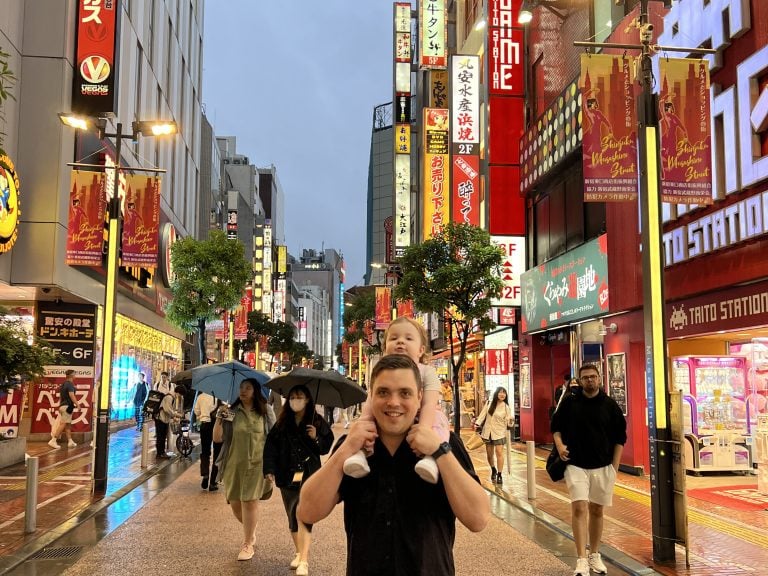
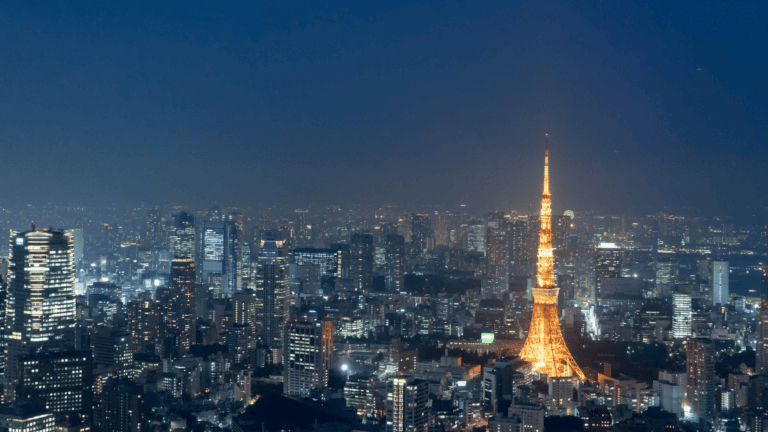
Tokyo might look intimidating on paper. It’s enormous, fast-paced, and the sheer scale of it can feel like a lot before you’ve even landed. But travelling Tokyo with kids turned out to be far more manageable than I expected, and it’s now one of my favourite cities in the world to visit with little ones.
Once you adjust your pace and let go of the idea that you need to see everything, Tokyo becomes an incredibly rewarding city for families. It’s clean, safe and efficient, and full of small everyday moments that kids genuinely love. Watching my toddler’s face on the Yamanote Line as the city scrolled past the window is one of my favourite travel memories.
What to Expect With a Toddler in Tokyo
Travelling Tokyo with a toddler means embracing a slower rhythm, and honestly, that’s not a bad thing. Some of our best days were built around one main activity, a park, a convenience store snack stop and a long train ride home. Tokyo has small quiet parks tucked between busy streets, child-friendly attractions that don’t feel overstimulating, and an endless novelty factor for little ones who are happy to just take it all in.
The city does reward some planning, particularly around accommodation and choosing neighbourhoods that keep you close to the things you want to do. But it’s not the stressful experience many parents fear.
Read on here for a realistic look at exploring Tokyo with a toddler in tow.
Things to do in Tokyo with Kids
Tokyo has an impressive range of family-friendly attractions, from the big-ticket stuff to the genuinely unexpected gems. Some of our favourites include:
- Tokyo DisneySea: the only DisneySea park in the world with a heap of kid-friendly rides
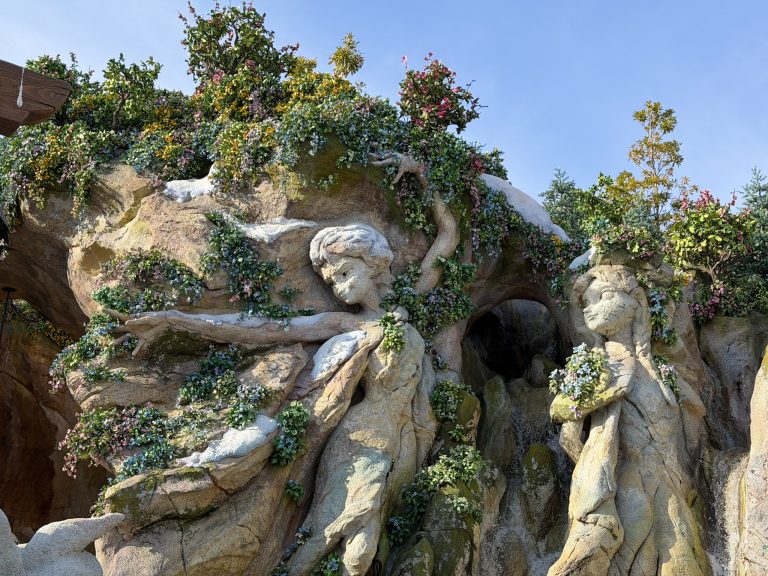
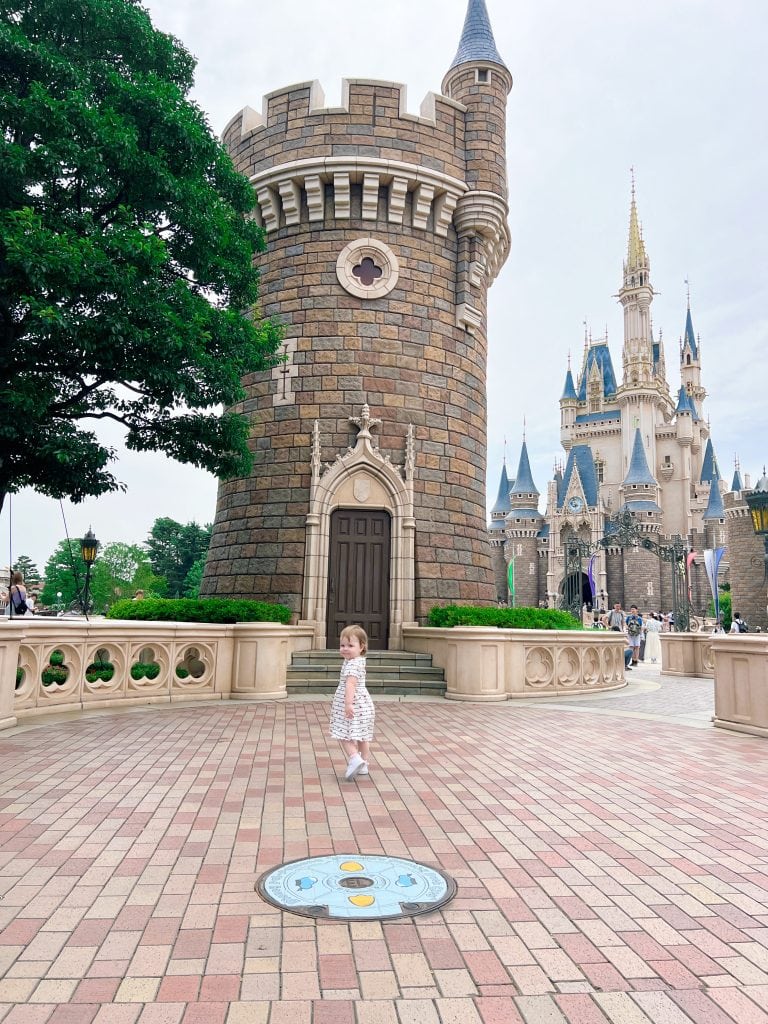
- Tokyo Disneyland: worth visiting just to ride the iconic Beauty and the Beast ride
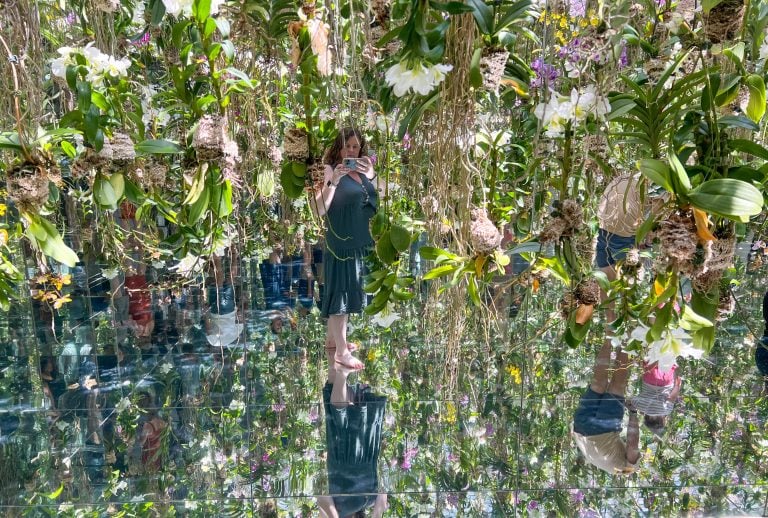
- teamLab Planets: an immersive art experience. Fun for the whole family
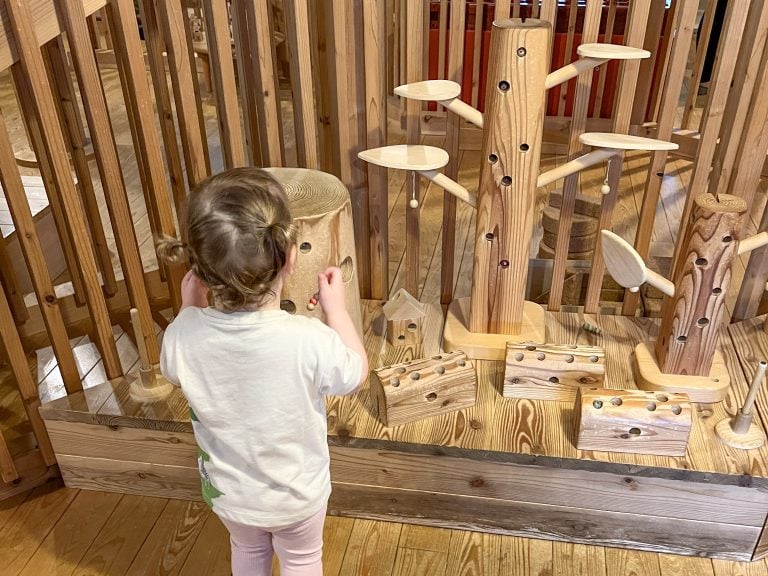
- Tokyo Toy Museum: a gorgeous interactive museum the kids will love
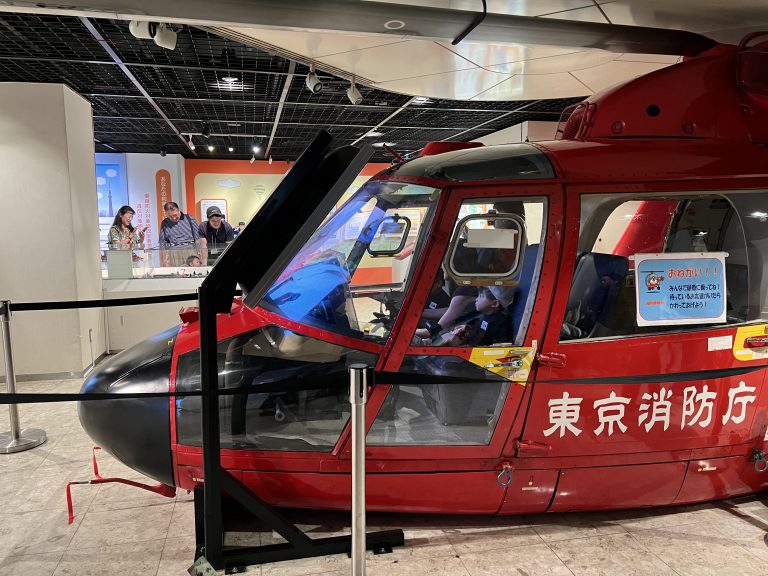
- Tokyo Fire Museum: free, hands-on and wildly underrated as a family activity.
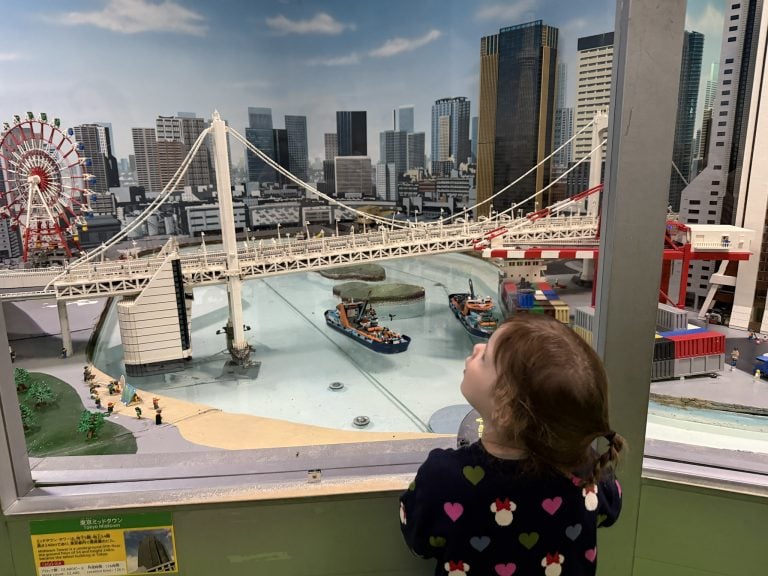
- Legoland Discovery Center Tokyo: a small, contained mini-theme park perfect for little kids
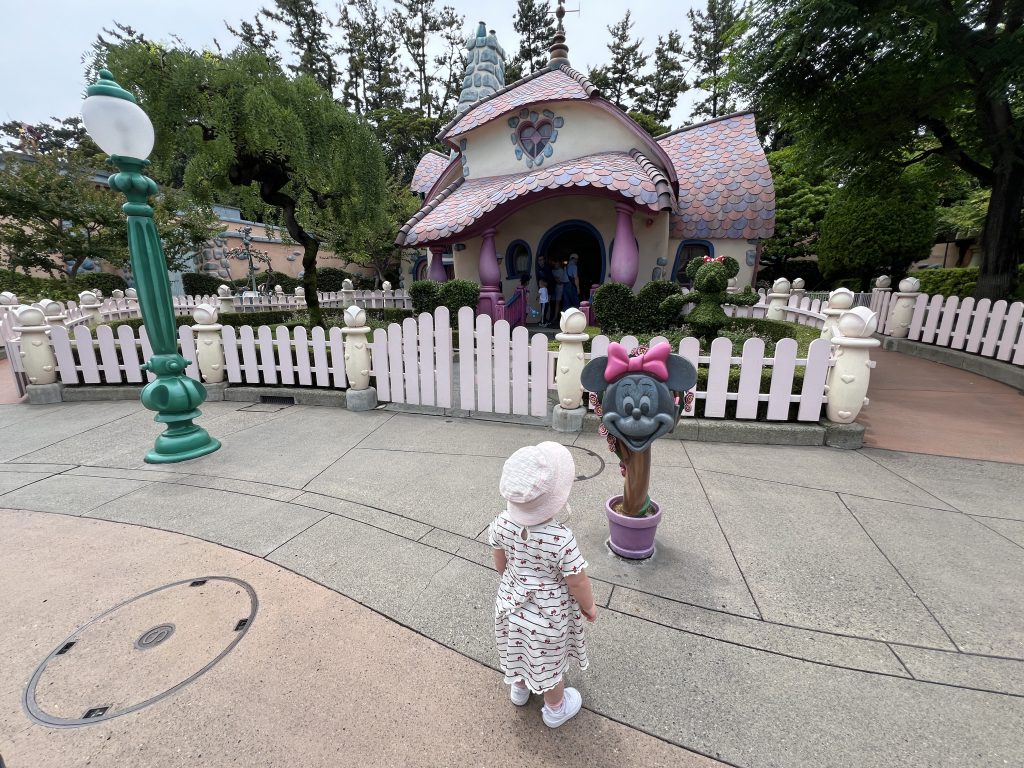
Here’s everything I’ve written about about Tokyo… so far
All my Tokyo content from big-ticket attractions to the quieter corners that don’t always make the tourist lists.
Osaka with kids: relaxed, playful and delicious
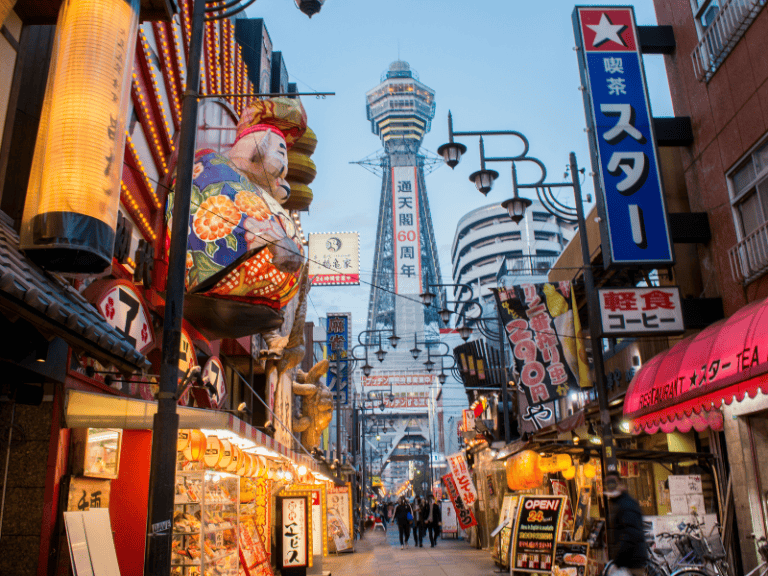
If Tokyo feels polished and purposeful, Osaka feels like it’s having more fun. It’s warmer, louder and considerably more chaotic in the best possible way, and that energy translates really well when you’re travelling with kids.
Osaka is often where families relax into the trip. The city is famous for its food culture, its friendly locals and its slightly unhinged street life, and it pairs beautifully with Tokyo as part of a first Japan itinerary. There’s a reason Tokyo, Kyoto and Osaka are known as the golden route for first-time visitors.
Why Osaka Works Well for Families
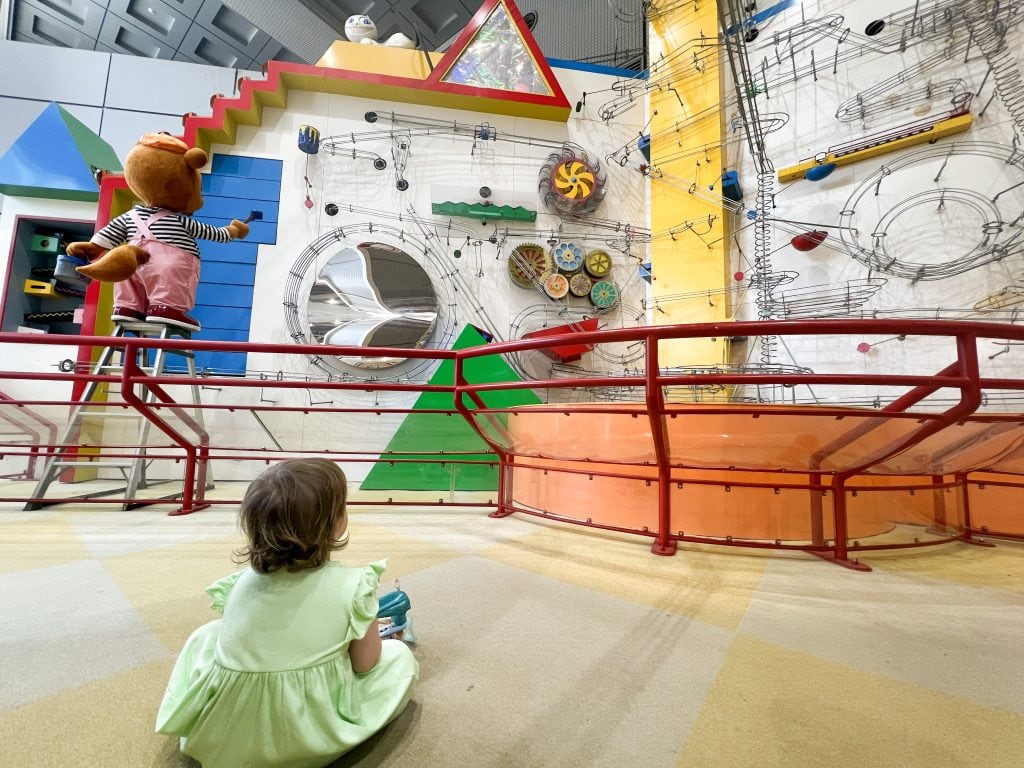
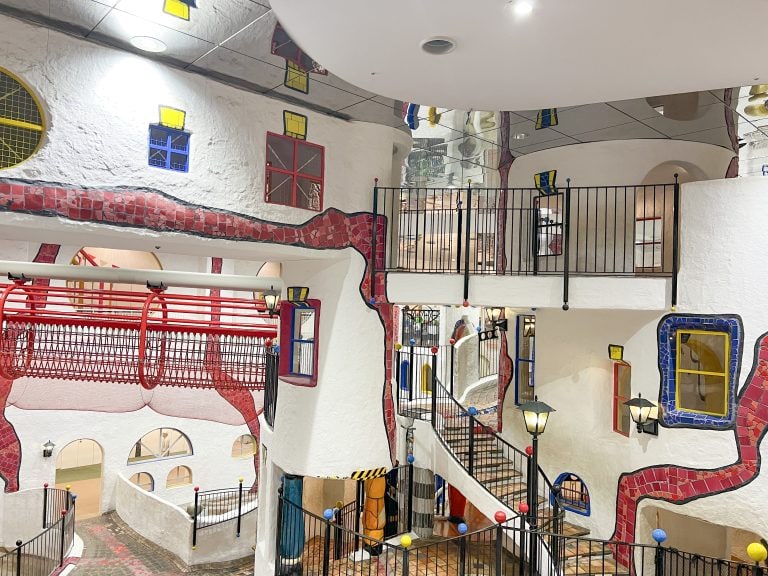
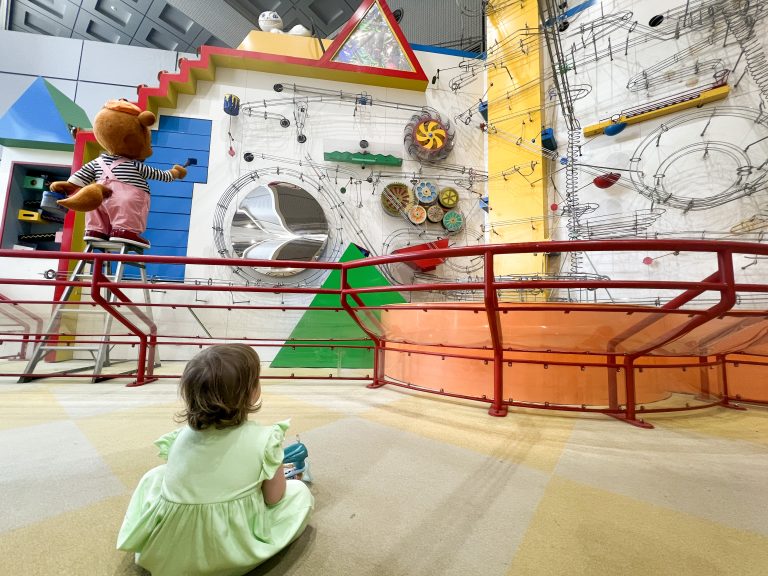
The pace is different here. There’s less pressure to be anywhere in particular, which is a genuine relief when you’re managing nap schedules and toddler meltdowns. The food scene is exceptional and surprisingly easy to navigate with kids. And the main attractions, like Osaka Kids Plaza and the Osaka Aquarium, are big, bold and immediately engaging for little ones in a way that doesn’t require much parental convincing.
Osaka also makes a brilliant base for day trips. Nara, Hiroshima, Kyoto and Universal Studios Japan are all accessible by train without needing to move accommodation, which is a significant win when you’re travelling with young children and the idea of packing up and checking out every two days makes you want to cry.
Osaka With Toddlers and Babies
Osaka is particularly well suited to younger kids. The city’s attractions tend to be visual, interactive and high-energy in a way that toddlers respond to immediately. And because the overall vibe is more casual than Tokyo, you’ll feel less conspicuous when your two-year-old has a meltdown outside Dotonbori at 6pm. Not that I’d know anything about that.
From aquariums to theme parks to easy street wandering, Osaka makes it easy to plan days that feel enjoyable rather than exhausting. I’ve shared what worked best for us (and what we skipped) in Osaka with a Toddler in tow.
Here’s everything I’ve written about Osaka…so far
All my Osaka posts including our favourite family friendly attractions and the day trips that are absolutely worth the train ride.
Tokyo or Osaka: which is better with kids?
It’s one of the most common questions I get about Japan, and the honest answer is that they’re better together than either is alone.
Tokyo offers variety, structure and that incredible sense of organised efficiency that makes it surprisingly easy to navigate with kids. Osaka offers warmth, flexibility and days that feel genuinely fun rather than logistically demanding.
If you only have time for one, I’d lean towards Tokyo for a first trip simply because the range of attractions is broader. But if you can do both, the combination gives you a much more complete picture of what Japan is like, and a much more balanced trip for the whole family.
Most first-time visitors to Japan do Tokyo and Osaka with Kyoto in between, and there’s a reason that the so-called “golden route” has become the default. It works really well, particularly with young kids, because the Shinkansen journeys between cities are short enough to be exciting rather than exhausting, and each city offers something genuinely different.
Kyoto with kids: slower, quieter and worth it
Kyoto is the part of a Japan itinerary that parents tend to feel most uncertain about. It’s famous for its temples and shrines and its traditional atmosphere, and on the surface that doesn’t exactly scream toddler-friendly. But we loved it, and I think families who skip Kyoto because it seems too cultural are missing out.
The pace in Kyoto is noticeably slower than Tokyo or Osaka, which can actually be a relief mid-trip. The streets are easier to navigate with a pram, the crowds are more manageable outside of peak season, and there’s a quietness to the city that makes it feel like a genuine breather after the intensity of the bigger cities.

Is Kyoto good for young kids?
Honestly, it depends on how you approach it. If you try to do Kyoto the way you would pre-kids, charging through temple after temple, you’ll probably find it harder going with little ones. But if you pick two or three things that genuinely excite you and build the rest of the day around the kids, it works really well.
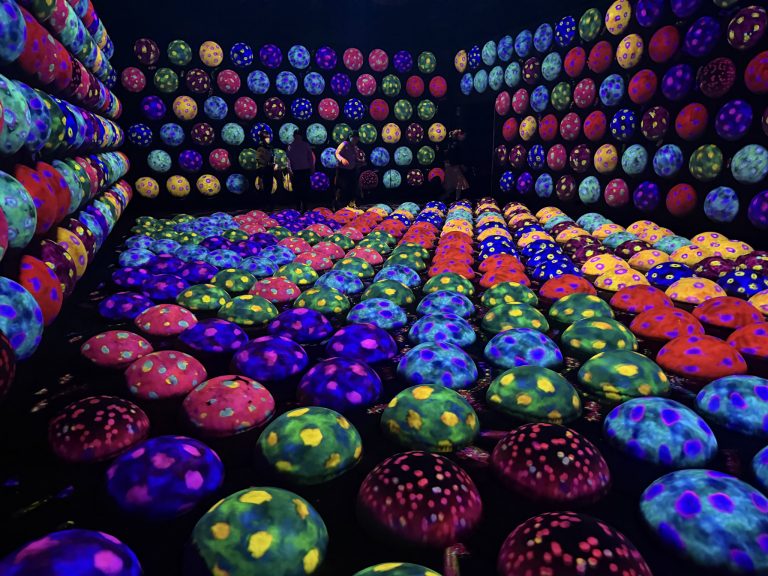
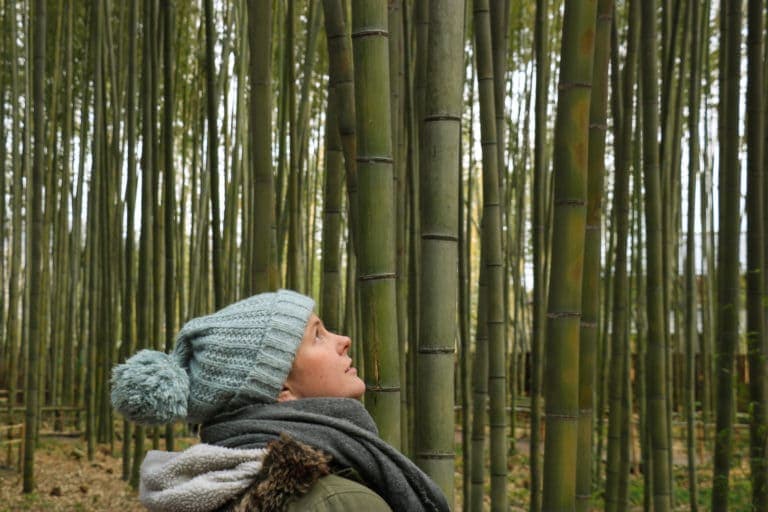
Our girls surprised us in Kyoto. The Arashiyama bamboo grove was a genuine hit, mostly because running through a bamboo forest is objectively brilliant at any age. And teamLab Biovortex was one of the highlights of our entire Japan trip, an immersive digital art experience that had both our toddler and our baby completely transfixed.
For families who want the cultural experience without wall-to-wall temples, Kyoto also has the Railway Museum, which is a brilliant option for train-obsessed kids, and plenty of beautiful riverside parks for days when everyone just needs to run around.
Kyoto after dark: a different kind of evening
As a solo traveller, some of my favourite Kyoto memories are from the evenings. Wandering the backstreets and alleyways, bar hopping, hoping to spot a geisha slipping between doorways in Gion. Kyoto at night has a magic to it that I genuinely love.
With young kids, those evening wanderings look a little different. They mostly involve hustling everyone back to the hotel before someone hits their limit and the whole day unravels.
But we did find our own version of Kyoto after dark: a ramen shop literally across the road from our hotel that became our go-to at the end of every long day. Our three-year-old demolished a bowl of noodle soup, systematically stole every piece of karaage chicken from our plates, and then announced it was time to go home for a bath.
Honestly, not a bad way to spend an evening in Kyoto.
A note on getting around Kyoto with a pram
Kyoto is more manageable with a stroller than its reputation suggests, but some of the older temple grounds have uneven stone paths that make it harder going. A carrier is a useful backup, particularly if you want to explore the smaller shrine complexes.
I’ve pulled together a complete three-day Kyoto itinerary with everything to see, do and eat in three days.
Here’s everything I’ve written about Kyoto… so far
My Kyoto guides including a three-day itinerary and a full breakdown of teamLab Biovortex for anyone planning to visit with kids.
Other posts about Japan
Not every Japan trip fits neatly into the Golden Route. Here are some other destinations worth considering if you have the time.